

Product Overview
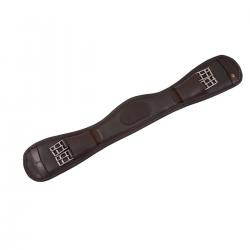
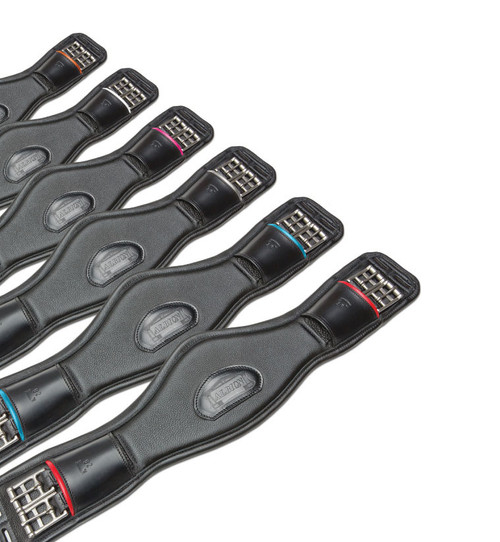
Performance Dressage Girth
- Designed, tested and scientifically proven using pressure mapping and gait analysis
- Contoured to avoid the sensitive area behind the elbow
- Handmade in Walsall, England
- Constructed from the finest English leather
NOTE: Narrow Gauge for use with dressage saddles on horses with a narrower ribcage
- Lined with Prolite® - known for its ability to distribute pressure, absorb impact and prevent rubbing
- Allows the Prolite® edge "to float" so the horse's muscles can move underneath rather than bang against
- Combination of the contour and the cushioning creates a buffer zone and prevents a "hard" edge
Features
- Designed, tested and scientifically proven using pressure mapping and gait analysis
- Contoured to avoid the sensitive area behind the elbow
- Handmade in Walsall, England
- Constructed from the finest English leather
- The Performance Girth is the only girth to have been tested with and developed in conjunction with the BEF World Class Programme.
Use and Care
It is essential to ensure that you properly care for and maintain your Fairfax Saddles Performance Girth. Failure to follow these guidelines or using inappropriate products could have an adverse affect on the leather and will invalidate the guarantee
1. Get the benefit
- The benefits of the Performance Girth are cumulative. So use it all the time for training and competition.
2. Storage
- When not in use, detach the girth and lay it on top of the saddle to maintain its natural curvature.
3. Cleaning
 Use warm water to sponge away sweat and dirt after EVERY use. A mild detergent can be added to the water.
IMPORTANT! The soft hide leather used on the girth to provide the ultimate comfort for your horse can become damaged by sweat, causing it to become hard and cracked. Removing the sweat after every use will prolong the lifespan and maintain the softness of your Performance Girth.- Dry as thoroughly as possible using a clean towel.
- When dry, apply Rapide Leathergel to all surfaces and rub in with a soft, clean cloth.
4. Important
- Avoid all glycerine and oil based cleaners and feeders.
- Wait until the leather is thoroughly dry before applying any treatment.
- Allow leather to dry naturally.
Do NOT place on radiators, Aga, hot pipes etc. - Never use wet tack.
Fairfax Girth Fitting
To achieve maximum benefit from the Fairfax Performance Girth, it needs to be fitted correctly. Follow these guidelines:
1. Size
i. What size?
Fairfax Performance Girths are measured in the standard way - buckle end to buckle end. As they are lined with Prolite, they can be thicker than some so we recommend customers go for one size larger than they currently use.

Narrow gauge
less than 20cm

Standard gauge
22-24cm
ii. Standard or Narrow Gauge?
 Narrow gauge girths are designed specifically to fit horses (and most ponies) with a narrower rib cage. Measure the flat area between the horse’s elbows. If it measures less than 20cm, your horse needs the narrow gauge.
If you don’t have a tape measure, try using a sweat scraper. If it won’t fit between the front legs, the horse is a narrow gauge fit. Or, if the palm of your hand lays flat between the front legs, the horse is more likely to be a standard fit.
Horses with a forward girth groove will also benefit from the narrow gauge.If your horse has wrinkly skin behind his elbows, opt for the narrow gauge version.
iii. Don't mind the gap
It is not uncommon for there to be a gap at the front edge of the girth between the leather and the horse’s sternum, particularly when the horse is standing still.
This is part of the design and the front edge of the girth is not supposed to fit tightly against the horse’s skin. The girth has a Prolite cushioned ‘buffer zone’ which ‘floats’ and allows the muscles of the chest to move, instead of being blocked by a hard edge of a normal girth.


2. Fitting

i. Face front
The front of the girth is clearly indicated. Make sure you fit the girth with the curved section facing forward (towards the forelimbs).

Narrow Gauge
Elbow Clearance

Standard Gauge
Elbow Clearance
ii. Avoid the elbows
When fitting the Performance Girth, the aim is to get the buckles away from the pressure-sensitive area behind the elbows – so fit the longest length possible.
As a general rule, on a short girth (dressage or monoflap saddle) fit the girth’s top edge as close to the bottom edge of the saddlecloth as possible when fully tightened. Obviously, this depends on the size of the saddlecloth, so an alternative guide on a dressage saddle is to have just two billet holes remaining on both sides of the saddle.
3. Ensure symettry
Always girth up evenly on both sides.
4. Let the buckles take the strain
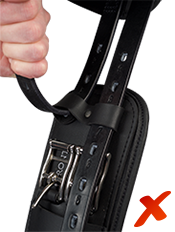
Do NOT use the leather keeper

DO use the buckles
Always thread the billet through the buckle before pulling the girth up. Do not use the leather keepers above the buckle to do the girth up - you will break them!
5. Use the central loop
Always connect martingales, breastplates etc to the ring provided. Don't pass any straps between the girth and the horse’s skin.
6. Don't pull the front leg forward
This is not necessary with the Fairfax Girth. We have found that stretching the horse's front leg after girthing up simply draws more skin forward into the area behind the elbow, increasing the risk of rubbing or girth galls.